# 2.1.04_Industrie

# Présentation générale du secteur

> Le secteur Industrie manufacturière et construction est un ensemble hétérogène dans le sens où l’on constate :
> 
> - que des émissions de polluants sont liées à l’utilisation de l’énergie tandis que d’autres sont liées à d’autres phénomènes (mécanique, chimique, etc.),
> - la grande diversité des procédés spécifiques aux différents secteurs de la branche et aux divers produits,
> - la variabilité des caractéristiques des installations même au sein d’un secteur (type d’équipement, taille, etc.).
> 
> Ce secteur représente entre 26% (début des années 1990) et 19% (fin des années 2020) des émissions de CO2e du total national français. Ces émissions proviennent à la fois des activités de combustion et des procédés industriels mis en œuvre. Alors que les émissions totales de GES en CO2e au niveau national ont diminué de 22 % entre 1990 et 2020, les émissions du secteur de l’industrie et de la construction ont baissé des 49 %.
> 
> *Extrait du rapport SECTEN 2022 réalisé par le Citepa*

#### Repères

[![2.0.png](https://documentation.rare.fr/uploads/images/gallery/2022-12/scaled-1680-/2-0.png)](https://documentation.rare.fr/uploads/images/gallery/2022-12/2-0.png)

<span style="mso-no-proof: yes;"> </span>

<span style="background-position: 0% 0%; background-repeat: repeat; background-attachment: scroll; background-image: none; background-size: auto; background-origin: padding-box; background-clip: border-box;">[![2.1.png](https://documentation.rare.fr/uploads/images/gallery/2022-12/scaled-1680-/2-1.png)](https://documentation.rare.fr/uploads/images/gallery/2022-12/2-1.png)</span>[![2.2.png](https://documentation.rare.fr/uploads/images/gallery/2022-12/scaled-1680-/2-2.png)](https://documentation.rare.fr/uploads/images/gallery/2022-12/2-2.png)

<span style="mso-no-proof: yes;"> </span>

<span style="background-position: 0% 0%; background-repeat: repeat; background-attachment: scroll; background-image: none; background-size: auto; background-origin: padding-box; background-clip: border-box;">[![2.3.png](https://documentation.rare.fr/uploads/images/gallery/2022-12/scaled-1680-/2-3.png)](https://documentation.rare.fr/uploads/images/gallery/2022-12/2-3.png)</span>

# Approche(s) méthodologique(s) de référence(s)

### Méthode de référence pour la réalisation d'un bilan d'émission de GES Scope 1&amp;2

<p class="callout success">L’approche de référence à l’échelle territoriale correspond à celle décrite dans le guide méthodologique pour l’élaboration des inventaires territoriaux des émissions atmosphériques (polluants de l’air et gaz à effet de serre) appelé aussi guide PCIT2.</p>

#### Limites d'interprétation des indicateurs issus de l'application de l'approche de référence

Une lecture strictement réduite au périmètre dit « cadastral » des consommations et émissions de GES peut limiter la compréhension des enjeux climatique du secteur de l’Industrie. Ce périmètre ne permet de mettre en lumière qu’une partie limitée des enjeux environnementaux associés (sobriété, efficacité énergétique des procédés, évolutions technologiques, etc.) au détriment de plusieurs enjeux de fond : économie de la fonctionnalité, économie circulaire, éco-conception, réindustrialisation, etc.

Les évolutions territoriales d’émissions et des consommations énergétiques associées du secteur de l’Industrie à l’échelle territoriale fine doivent être interprétées avec des précautions adaptées aux incertitudes plus ou moins fortes qui peuvent peser sur certains territoires de petites tailles et/ou peu raccordés au réseau de gaz et/ou peu industrialisés.

Conformément aux recommandations de l’Ademe en matière de diagnostic PCAET, un complément au diagnostic portant sur l’estimation des émissions indirectes/importées est donc recommandé.

# Production des indicateurs territoriaux du secteur d'activité

### Liste des indicateurs

<table border="1" cellpadding="0" cellspacing="0" id="bkmrk-nom-unit%C3%A9-d%C3%A9finition" style="border-collapse: collapse; width: 833px; height: 964px; border-spacing: 0px; border: 1px solid #E67E23;" width="1333"><colgroup><col style="width: 261px;" width="446"></col><col style="width: 139px;" width="93"></col><col style="width: 412px;" width="701"></col></colgroup><tbody><tr style="height: 15.0pt;"><td class="xl65" height="20" style="height: 15pt; width: 335pt; font-size: 11pt; color: white; font-weight: bold; text-decoration: none; font-family: Calibri, sans-serif; border-color: rgb(230, 126, 35); border-style: solid none; border-width: 1px; background: rgb(237, 125, 49); vertical-align: middle; padding: 0px;" width="446">Nom</td><td class="xl65 align-center" style="width: 70pt; font-size: 11pt; color: white; font-weight: bold; text-decoration: none; font-family: Calibri, sans-serif; border-color: rgb(230, 126, 35); border-style: solid none; border-width: 1px; background: rgb(237, 125, 49); vertical-align: middle; padding: 0px;" width="93">Unité</td><td class="xl65" style="width: 526pt; font-size: 11pt; color: white; font-weight: bold; text-decoration: none; font-family: Calibri, sans-serif; border-color: rgb(230, 126, 35); border-style: solid none; border-width: 1px; background: rgb(237, 125, 49); padding: 0px;" width="701">Définition littérale</td></tr><tr style="height: 30.0pt;"><td class="xl66" height="40" style="height: 30pt; width: 335pt; font-size: 11pt; color: black; font-weight: 400; text-decoration: none; font-family: Calibri, sans-serif; border-color: rgb(230, 126, 35); border-style: solid none; border-width: 1px; background: rgb(252, 228, 214); vertical-align: middle; padding: 0px;" width="446">Émissions directes de gaz à effet de serre<span style="mso-spacerun: yes;"> </span></td><td class="xl68 align-center" style="width: 70pt; font-size: 11pt; color: black; font-weight: 400; text-decoration: none; font-family: Calibri, sans-serif; border-color: rgb(230, 126, 35); border-style: solid none; border-width: 1px; background: rgb(252, 228, 214); vertical-align: middle; padding: 0px;" width="93">tonne eqCO<span class="font10"><sub>2</sub></span></td><td class="xl66" style="width: 526pt; font-size: 11pt; color: black; font-weight: 400; text-decoration: none; font-family: Calibri, sans-serif; border-color: rgb(230, 126, 35); border-style: solid none; border-width: 1px; background: rgb(252, 228, 214); padding: 0px;" width="701">Total des émissions de gaz à effet de serre énergétiques et non énergétiques générées par les activités industrielles sur le territoire considéré.</td></tr><tr style="height: 45.0pt;"><td class="xl66" height="60" style="height: 45pt; width: 335pt; font-size: 11pt; color: black; font-weight: 400; text-decoration: none; font-family: Calibri, sans-serif; border-color: rgb(230, 126, 35); border-style: solid none; border-width: 1px; vertical-align: middle; padding: 0px;" width="446">Émissions indirectes de gaz à effet de serre (scope 2)</td><td class="xl68 align-center" style="width: 70pt; font-size: 11pt; color: black; font-weight: 400; text-decoration: none; font-family: Calibri, sans-serif; border-color: rgb(230, 126, 35); border-style: solid none; border-width: 1px; vertical-align: middle; padding: 0px;" width="93">tonne eqCO<span class="font10"><sub>2</sub></span></td><td class="xl66" style="width: 526pt; font-size: 11pt; color: black; font-weight: 400; text-decoration: none; font-family: Calibri, sans-serif; border-color: rgb(230, 126, 35); border-style: solid none; border-width: 1px; padding: 0px;" width="701">Total des émissions indirectes liées à la production nationale d'électricité et à la production de chaleur et de froid des réseaux, à proportion de la consommation finale d'électricité, de chaleur et de froid des activités industrielles présentes sur le territoire considéré</td></tr><tr style="height: 30.0pt;"><td class="xl66" height="40" style="height: 30pt; width: 335pt; font-size: 11pt; color: black; font-weight: 400; text-decoration: none; font-family: Calibri, sans-serif; border-color: rgb(230, 126, 35); border-style: solid none; border-width: 1px; background: rgb(252, 228, 214); vertical-align: middle; padding: 0px;" width="446">Émissions énergétiques directes de gaz à effet de serre<span style="mso-spacerun: yes;"> </span></td><td class="xl68 align-center" style="width: 70pt; font-size: 11pt; color: black; font-weight: 400; text-decoration: none; font-family: Calibri, sans-serif; border-color: rgb(230, 126, 35); border-style: solid none; border-width: 1px; background: rgb(252, 228, 214); vertical-align: middle; padding: 0px;" width="93">tonne eqCO<span class="font10"><sub>2</sub></span></td><td class="xl66" style="width: 526pt; font-size: 11pt; color: black; font-weight: 400; text-decoration: none; font-family: Calibri, sans-serif; border-color: rgb(230, 126, 35); border-style: solid none; border-width: 1px; background: rgb(252, 228, 214); padding: 0px;" width="701">Total des émissions de gaz à effet de serre énergétiques générées par les activités industrielles présentes sur le territoire considéré</td></tr><tr style="height: 30.0pt;"><td class="xl66" height="40" style="height: 30pt; width: 335pt; font-size: 11pt; color: black; font-weight: 400; text-decoration: none; font-family: Calibri, sans-serif; border-color: rgb(230, 126, 35); border-style: solid none; border-width: 1px; vertical-align: middle; padding: 0px;" width="446">Émissions non énergétiques directes de gaz à effet de serre<span style="mso-spacerun: yes;"> </span></td><td class="xl68 align-center" style="width: 70pt; font-size: 11pt; color: black; font-weight: 400; text-decoration: none; font-family: Calibri, sans-serif; border-color: rgb(230, 126, 35); border-style: solid none; border-width: 1px; vertical-align: middle; padding: 0px;" width="93">tonne eqCO<span class="font10"><sub>2</sub></span></td><td class="xl66" style="width: 526pt; font-size: 11pt; color: black; font-weight: 400; text-decoration: none; font-family: Calibri, sans-serif; border-color: rgb(230, 126, 35); border-style: solid none; border-width: 1px; padding: 0px;" width="701">Total des émissions de gaz à effet de serre non énergétiques générées par les activités industrielles présentes sur le territoire considéré</td></tr><tr style="height: 30.0pt;"><td class="xl66" height="40" style="height: 30pt; width: 335pt; font-size: 11pt; color: black; font-weight: 400; text-decoration: none; font-family: Calibri, sans-serif; border-color: rgb(230, 126, 35); border-style: solid none; border-width: 1px; background: rgb(252, 228, 214); vertical-align: middle; padding: 0px;" width="446">Consommation d’énergie finale</td><td class="xl68 align-center" style="width: 70pt; font-size: 11pt; color: black; font-weight: 400; text-decoration: none; font-family: Calibri, sans-serif; border-color: rgb(230, 126, 35); border-style: solid none; border-width: 1px; background: rgb(252, 228, 214); vertical-align: middle; padding: 0px;" width="93">MWh</td><td class="xl66" style="width: 526pt; font-size: 11pt; color: black; font-weight: 400; text-decoration: none; font-family: Calibri, sans-serif; border-color: rgb(230, 126, 35); border-style: solid none; border-width: 1px; background: rgb(252, 228, 214); padding: 0px;" width="701">Énergie livrée pour assurer la consommation finale des activités industrielles présentes sur le territoire considéré</td></tr><tr style="height: 30.0pt;"><td class="xl66" height="40" style="height: 30pt; width: 335pt; font-size: 11pt; color: black; font-weight: 400; text-decoration: none; font-family: Calibri, sans-serif; border-color: rgb(230, 126, 35); border-style: solid none; border-width: 1px; vertical-align: middle; padding: 0px;" width="446">Émissions de dioxyde de carbone (CO<span class="font10"><sub>2</sub></span><span class="font8">)</span></td><td class="xl68 align-center" style="width: 70pt; font-size: 11pt; color: black; font-weight: 400; text-decoration: none; font-family: Calibri, sans-serif; border-color: rgb(230, 126, 35); border-style: solid none; border-width: 1px; vertical-align: middle; padding: 0px;" width="93">tonne

tonne eqCO2

</td><td class="xl66" style="width: 526pt; font-size: 11pt; color: black; font-weight: 400; text-decoration: none; font-family: Calibri, sans-serif; border-color: rgb(230, 126, 35); border-style: solid none; border-width: 1px; padding: 0px;" width="701">Émissions de dioxyde de carbone générées par les activités industrielles présentes sur le territoire considéré</td></tr><tr style="height: 30.0pt;"><td class="xl66" height="40" style="height: 30pt; width: 335pt; font-size: 11pt; color: black; font-weight: 400; text-decoration: none; font-family: Calibri, sans-serif; border-color: rgb(230, 126, 35); border-style: solid none; border-width: 1px; background: rgb(252, 228, 214); vertical-align: middle; padding: 0px;" width="446">Émissions de méthane (CH<span class="font10"><sub>4</sub></span><span class="font8">)</span></td><td class="xl68 align-center" style="width: 70pt; font-size: 11pt; color: black; font-weight: 400; text-decoration: none; font-family: Calibri, sans-serif; border-color: rgb(230, 126, 35); border-style: solid none; border-width: 1px; background: rgb(252, 228, 214); vertical-align: middle; padding: 0px;" width="93">tonne

tonne eqCO2

</td><td class="xl66" style="width: 526pt; font-size: 11pt; color: black; font-weight: 400; text-decoration: none; font-family: Calibri, sans-serif; border-color: rgb(230, 126, 35); border-style: solid none; border-width: 1px; background: rgb(252, 228, 214); padding: 0px;" width="701">Émissions de dioxyde de méthane générées par les activités industrielles présentes sur le territoire considéré</td></tr><tr style="height: 30.0pt;"><td class="xl66" height="40" style="height: 30pt; width: 335pt; font-size: 11pt; color: black; font-weight: 400; text-decoration: none; font-family: Calibri, sans-serif; border-color: rgb(230, 126, 35); border-style: solid none; border-width: 1px; vertical-align: middle; padding: 0px;" width="446">Émissions de protoxyde d'azote (N<span class="font10"><sub>2</sub></span><span class="font8">O)</span></td><td class="xl68 align-center" style="width: 70pt; font-size: 11pt; color: black; font-weight: 400; text-decoration: none; font-family: Calibri, sans-serif; border-color: rgb(230, 126, 35); border-style: solid none; border-width: 1px; vertical-align: middle; padding: 0px;" width="93">tonne

tonne eqCO2

</td><td class="xl66" style="width: 526pt; font-size: 11pt; color: black; font-weight: 400; text-decoration: none; font-family: Calibri, sans-serif; border-color: rgb(230, 126, 35); border-style: solid none; border-width: 1px; padding: 0px;" width="701">Émissions de dioxyde de protoxyde d'azote générées par les activités industrielles présentes sur le territoire considéré</td></tr><tr style="height: 30.0pt;"><td class="xl66" height="40" style="height: 30pt; width: 335pt; font-size: 11pt; color: black; font-weight: 400; text-decoration: none; font-family: Calibri, sans-serif; border-color: rgb(230, 126, 35); border-style: solid none; border-width: 1px; background: rgb(252, 228, 214); vertical-align: middle; padding: 0px;" width="446">Émissions de gaz fluorés</td><td class="xl68 align-center" style="width: 70pt; font-size: 11pt; color: black; font-weight: 400; text-decoration: none; font-family: Calibri, sans-serif; border-color: rgb(230, 126, 35); border-style: solid none; border-width: 1px; background: rgb(252, 228, 214); vertical-align: middle; padding: 0px;" width="93">tonne eqCO<span class="font10"><sub>2</sub></span></td><td class="xl66" style="width: 526pt; font-size: 11pt; color: black; font-weight: 400; text-decoration: none; font-family: Calibri, sans-serif; border-color: rgb(230, 126, 35); border-style: solid none; border-width: 1px; background: rgb(252, 228, 214); padding: 0px;" width="701">Émissions de gaz fluorés (HFC, PFC, SF6 et NF3) générées par les activités industrielles présentes sur le territoire considéré</td></tr><tr style="height: 30.0pt;"><td class="xl66" height="40" style="height: 30pt; width: 335pt; font-size: 11pt; color: black; font-weight: 400; text-decoration: none; font-family: Calibri, sans-serif; border-color: rgb(230, 126, 35); border-style: solid none; border-width: 1px; vertical-align: middle; padding: 0px;" width="446">Émissions d'hydrofluorocarbures (HFC)</td><td class="xl68 align-center" style="width: 70pt; font-size: 11pt; color: black; font-weight: 400; text-decoration: none; font-family: Calibri, sans-serif; border-color: rgb(230, 126, 35); border-style: solid none; border-width: 1px; vertical-align: middle; padding: 0px;" width="93">tonne

tonne eqCO2

</td><td class="xl66" style="width: 526pt; font-size: 11pt; color: black; font-weight: 400; text-decoration: none; font-family: Calibri, sans-serif; border-color: rgb(230, 126, 35); border-style: solid none; border-width: 1px; padding: 0px;" width="701">Émissions d'hydrofluorocarbures générées par les activités industrielles présentes sur le territoire considéré</td></tr><tr style="height: 30.0pt;"><td class="xl66" height="40" style="height: 30pt; width: 335pt; font-size: 11pt; color: black; font-weight: 400; text-decoration: none; font-family: Calibri, sans-serif; border-color: rgb(230, 126, 35); border-style: solid none; border-width: 1px; background: rgb(252, 228, 214); vertical-align: middle; padding: 0px;" width="446">Émissions d'hexafluorure de soufre (SF<span class="font10"><sub>6</sub></span><span class="font8">)</span></td><td class="xl68 align-center" style="width: 70pt; font-size: 11pt; color: black; font-weight: 400; text-decoration: none; font-family: Calibri, sans-serif; border-color: rgb(230, 126, 35); border-style: solid none; border-width: 1px; background: rgb(252, 228, 214); vertical-align: middle; padding: 0px;" width="93">tonne

tonne eqCO2

</td><td class="xl66" style="width: 526pt; font-size: 11pt; color: black; font-weight: 400; text-decoration: none; font-family: Calibri, sans-serif; border-color: rgb(230, 126, 35); border-style: solid none; border-width: 1px; background: rgb(252, 228, 214); padding: 0px;" width="701">Émissions d'hexafluorure de soufre générées par les activités industrielles présentes sur le territoire considéré</td></tr><tr style="height: 30.0pt;"><td class="xl66" height="40" style="height: 30pt; width: 335pt; font-size: 11pt; color: black; font-weight: 400; text-decoration: none; font-family: Calibri, sans-serif; border-color: rgb(230, 126, 35); border-style: solid none; border-width: 1px; vertical-align: middle; padding: 0px;" width="446">Émissions de perfluorocarbure (PFC)</td><td class="xl68 align-center" style="width: 70pt; font-size: 11pt; color: black; font-weight: 400; text-decoration: none; font-family: Calibri, sans-serif; border-color: rgb(230, 126, 35); border-style: solid none; border-width: 1px; vertical-align: middle; padding: 0px;" width="93">tonne

tonne eqCO2

</td><td class="xl66" style="width: 526pt; font-size: 11pt; color: black; font-weight: 400; text-decoration: none; font-family: Calibri, sans-serif; border-color: rgb(230, 126, 35); border-style: solid none; border-width: 1px; padding: 0px;" width="701">Émissions de perfluorocarbure générées par les activités industrielles présentes sur le territoire considéré</td></tr><tr style="height: 30.0pt;"><td class="xl66" height="40" style="height: 30pt; width: 335pt; font-size: 11pt; color: black; font-weight: 400; text-decoration: none; font-family: Calibri, sans-serif; border-color: rgb(230, 126, 35); border-style: solid none; border-width: 1px; background: rgb(252, 228, 214); vertical-align: middle; padding: 0px;" width="446">Émissions de trifluorure d'azote (NF<span class="font10"><sub>3</sub></span><span class="font8">)</span></td><td class="xl68 align-center" style="width: 70pt; font-size: 11pt; color: black; font-weight: 400; text-decoration: none; font-family: Calibri, sans-serif; border-color: rgb(230, 126, 35); border-style: solid none; border-width: 1px; background: rgb(252, 228, 214); vertical-align: middle; padding: 0px;" width="93">tonne

tonne eqCO2

</td><td class="xl66" style="width: 526pt; font-size: 11pt; color: black; font-weight: 400; text-decoration: none; font-family: Calibri, sans-serif; border-color: rgb(230, 126, 35); border-style: solid none; border-width: 1px; background: rgb(252, 228, 214); padding: 0px;" width="701">Émissions de trifluorure d'azote générées par les activités industrielles présentes sur le territoire considéré</td></tr><tr style="height: 30.0pt;"><td class="xl66" height="40" style="height: 30pt; width: 335pt; font-size: 11pt; color: black; font-weight: 400; text-decoration: none; font-family: Calibri, sans-serif; border-style: solid none; border-width: 1px; border-color: rgb(230, 126, 35); vertical-align: middle; padding: 0px;" width="446">Consommation finale d’électricité du secteur de l’Industrie (hors énergie)</td><td class="xl68 align-center" style="width: 70pt; font-size: 11pt; color: black; font-weight: 400; text-decoration: none; font-family: Calibri, sans-serif; border-style: solid none; border-width: 1px; border-color: rgb(230, 126, 35); vertical-align: middle; padding: 0px;" width="93">MWh</td><td class="xl66" style="width: 526pt; font-size: 11pt; color: black; font-weight: 400; text-decoration: none; font-family: Calibri, sans-serif; border-color: rgb(230, 126, 35); border-style: solid none; border-width: 1px; padding: 0px;" width="701">Électricité livrée pour assurer la consommation finale des activités industrielles présentes sur le territoire considéré</td></tr><tr style="height: 30.0pt;"><td class="xl66" height="40" style="height: 30pt; width: 335pt; font-size: 11pt; color: black; font-weight: 400; text-decoration: none; font-family: Calibri, sans-serif; border-style: solid none; border-width: 1px; background: rgb(252, 228, 214); border-color: rgb(230, 126, 35); vertical-align: middle; padding: 0px;" width="446"><span style="mso-color-alt: windowtext;">Consommation finale de gaz du secteur de l’Industrie (hors énergie)</span></td><td class="xl68 align-center" style="width: 70pt; font-size: 11pt; color: black; font-weight: 400; text-decoration: none; font-family: Calibri, sans-serif; border-style: solid none; border-width: 1px; background: rgb(252, 228, 214); border-color: rgb(230, 126, 35); vertical-align: middle; padding: 0px;" width="93"><span style="mso-color-alt: windowtext;">MWh</span></td><td class="xl66" style="width: 526pt; font-size: 11pt; color: black; font-weight: 400; text-decoration: none; font-family: Calibri, sans-serif; border-color: rgb(230, 126, 35); border-style: solid none; border-width: 1px; background: rgb(252, 228, 214); padding: 0px;" width="701">Gaz de réseau livré pour assurer la consommation finale des activités industrielles présentes sur le territoire considéré</td></tr><tr style="height: 30.0pt;"><td class="xl66" height="40" style="height: 30pt; width: 335pt; font-size: 11pt; color: black; font-weight: 400; text-decoration: none; font-family: Calibri, sans-serif; border-style: solid none; border-width: 1px; border-color: rgb(230, 126, 35); vertical-align: middle; padding: 0px;" width="446">Consommation finale de charbon du secteur de l’Industrie (hors énergie)</td><td class="xl68 align-center" style="width: 70pt; font-size: 11pt; color: black; font-weight: 400; text-decoration: none; font-family: Calibri, sans-serif; border-style: solid none; border-width: 1px; border-color: rgb(230, 126, 35); vertical-align: middle; padding: 0px;" width="93">MWh</td><td class="xl66" style="width: 526pt; font-size: 11pt; color: black; font-weight: 400; text-decoration: none; font-family: Calibri, sans-serif; border-color: rgb(230, 126, 35); border-style: solid none; border-width: 1px; padding: 0px;" width="701">Charbon livré pour assurer la consommation finale des activités industrielles présentes sur le territoire considéré</td></tr><tr style="height: 30.0pt;"><td class="xl66" height="40" style="height: 30pt; width: 335pt; font-size: 11pt; color: black; font-weight: 400; text-decoration: none; font-family: Calibri, sans-serif; border-style: solid none; border-width: 1px; background: rgb(252, 228, 214); border-color: rgb(230, 126, 35); vertical-align: middle; padding: 0px;" width="446"><span style="mso-color-alt: windowtext;">Consommation finale de produits pétroliers du secteur de l’Industrie (hors énergie)</span></td><td class="xl68 align-center" style="width: 70pt; font-size: 11pt; color: black; font-weight: 400; text-decoration: none; font-family: Calibri, sans-serif; border-style: solid none; border-width: 1px; background: rgb(252, 228, 214); border-color: rgb(230, 126, 35); vertical-align: middle; padding: 0px;" width="93"><span style="mso-color-alt: windowtext;">MWh</span></td><td class="xl66" style="width: 526pt; font-size: 11pt; color: black; font-weight: 400; text-decoration: none; font-family: Calibri, sans-serif; border-color: rgb(230, 126, 35); border-style: solid none; border-width: 1px; background: rgb(252, 228, 214); padding: 0px;" width="701">Produits pétroliers livrés pour assurer la consommation finale des activités industrielles présentes sur le territoire considéré</td></tr><tr style="height: 30.0pt;"><td class="xl66" height="40" style="height: 30pt; width: 335pt; font-size: 11pt; color: black; font-weight: 400; text-decoration: none; font-family: Calibri, sans-serif; border-style: solid none; border-width: 1px; border-color: rgb(230, 126, 35); vertical-align: middle; padding: 0px;" width="446">Consommation finale de biomasse solide du secteur de l’Industrie (hors énergie)<span style="mso-spacerun: yes;"> </span></td><td class="xl68 align-center" style="width: 70pt; font-size: 11pt; color: black; font-weight: 400; text-decoration: none; font-family: Calibri, sans-serif; border-color: rgb(230, 126, 35); border-style: solid none; border-width: 1px; vertical-align: middle; padding: 0px;" width="93">MWh</td><td class="xl66" style="width: 526pt; font-size: 11pt; color: black; font-weight: 400; text-decoration: none; font-family: Calibri, sans-serif; border-color: rgb(230, 126, 35); border-style: solid none; border-width: 1px; padding: 0px;" width="701">Prouits énergétiques de la filière biomasse solide livrés pour assurer la consommation finale des activités industrielles présentes sur le territoire considéré</td></tr><tr style="height: 30.0pt;"><td class="xl66" height="40" style="height: 30pt; width: 335pt; font-size: 11pt; color: black; font-weight: 400; text-decoration: none; font-family: Calibri, sans-serif; border-style: solid none; border-width: 1px; background: rgb(252, 228, 214); border-color: rgb(230, 126, 35); vertical-align: middle; padding: 0px;" width="446"><span style="mso-color-alt: windowtext;">Consommation finale de chaleur du secteur de l’Industrie (hors énergie)</span></td><td class="xl68 align-center" style="width: 70pt; font-size: 11pt; color: black; font-weight: 400; text-decoration: none; font-family: Calibri, sans-serif; border-style: solid none; border-width: 1px; background: rgb(252, 228, 214); border-color: rgb(230, 126, 35); vertical-align: middle; padding: 0px;" width="93"><span style="mso-color-alt: windowtext;">MWh</span></td><td class="xl66" style="width: 526pt; font-size: 11pt; color: black; font-weight: 400; text-decoration: none; font-family: Calibri, sans-serif; border-color: rgb(230, 126, 35); border-style: solid none; border-width: 1px; background: rgb(252, 228, 214); padding: 0px;" width="701">Chaleur réseau livrée pour assurer la consommation finale des activités industrielles présentes sur le territoire considéré</td></tr></tbody></table>

### Périmètres de comptabilité

Au sens « cadastral » de l’exercice, le bilan, ou inventaire des émissions de GES consiste à comptabiliser toutes les sources d’émissions énergétiques et non énergétiques directes générés sur le territoire d’étude par l’utilisation de l’ensemble des acteurs économiques Industriels (y compris les entreprises de moins de 20 salariés).

#### Détail des sources d'émissions directes à considérer  


*<span style="color: #8b6e73; mso-themecolor: text1; mso-themetint: 191;">CO2  
</span>*

- *<span style="color: #8b6e73; mso-themecolor: text1; mso-themetint: 191;">combustion (procédés/chaudières)</span>*
- *<span style="color: #8b6e73; mso-themecolor: text1; mso-themetint: 191;">production d’électricité</span>*
- *<span style="color: #8b6e73; mso-themecolor: text1; mso-themetint: 191;">enrobage</span>*
- *<span style="color: #8b6e73; mso-themecolor: text1; mso-themetint: 191;">décarbonatation</span>*
- *<span style="color: #8b6e73; mso-themecolor: text1; mso-themetint: 191;">EMNR</span>*
- *<span style="color: #8b6e73; mso-themecolor: text1; mso-themetint: 191;">métallurgie/chimie</span>*

*<span style="color: #8b6e73; mso-themecolor: text1; mso-themetint: 191;">CH4</span>*

- *<span style="color: #8b6e73; mso-themecolor: text1; mso-themetint: 191;">combustion (procédés/chaudières)</span>*
- *<span style="color: #8b6e73; mso-themecolor: text1; mso-themetint: 191;">enrobage</span>*
- *<span style="color: #8b6e73; mso-themecolor: text1; mso-themetint: 191;">EMNR</span>*
- *<span style="color: #8b6e73; mso-themecolor: text1; mso-themetint: 191;">métallurgie/chimie</span>*

*<span style="color: #8b6e73; mso-themecolor: text1; mso-themetint: 191;">N2O</span>*

- *<span style="color: #8b6e73; mso-themecolor: text1; mso-themetint: 191;">combustion (procédés/chaudières)</span>*
- *<span style="color: #8b6e73; mso-themecolor: text1; mso-themetint: 191;">chimie</span>*

*<span style="color: #8b6e73; mso-themecolor: text1; mso-themetint: 191;">HFC/PFC</span>*

- *<span style="color: #8b6e73; mso-themecolor: text1; mso-themetint: 191;">froid (IAA+hors IAA)</span>*

*<span style="font-size: 12.0pt; line-height: 107%; font-family: 'Calibri Light',sans-serif; mso-ascii-theme-font: major-latin; mso-fareast-font-family: 'Times New Roman'; mso-fareast-theme-font: major-fareast; mso-hansi-theme-font: major-latin; mso-bidi-font-family: 'Times New Roman'; mso-bidi-theme-font: major-bidi; color: #871d0a; mso-themecolor: accent1; mso-themeshade: 127;">Sources pouvant être négligées :</span>*

De manière générale, les émissions de GES non disponibles à partir de la base de données GEREP détaillée peuvent être considérées comme négligeables. De manière plus précise, les sources suivantes sont considérées comme optionnelles car négligeables et difficiles à estimer à l’échelle territoriale :

<span style="mso-ascii-font-family: Calibri; mso-fareast-font-family: Calibri; mso-hansi-font-family: Calibri; mso-bidi-font-family: Calibri; color: #8b6e73; mso-themecolor: text1; mso-themetint: 191; mso-bidi-font-style: italic;"><span style="mso-list: Ignore;">-<span style="font: 7.0pt 'Times New Roman';"> </span></span></span>*<span style="color: #8b6e73; mso-themecolor: text1; mso-themetint: 191;">les émissions de CO2 et de méthane liées à la fabrication de solvants/peintures</span>*

<span style="mso-ascii-font-family: Calibri; mso-fareast-font-family: Calibri; mso-hansi-font-family: Calibri; mso-bidi-font-family: Calibri; color: #8b6e73; mso-themecolor: text1; mso-themetint: 191; mso-bidi-font-style: italic;"><span style="mso-list: Ignore;">-<span style="font: 7.0pt 'Times New Roman';"> </span></span></span>*<span style="color: #8b6e73; mso-themecolor: text1; mso-themetint: 191;">les émission de gaz fluorés liées aux aérosols et aux extincteurs</span>*

<p class="callout info">Un détail des sources par code Snap et affectations par type d’activité est disponibles dans le guide PCIT2</p>

### Sources de données préconisées à l'échelle territoriale

<table border="1" cellpadding="0" cellspacing="0" id="bkmrk-sources-jeux-de-donn" style="border-collapse: collapse; width: 403px; height: 593px; border-width: 1px; border-spacing: 0px; border-color: #E67E23;" width="1233"><colgroup><col style="width: 223px;" width="252"></col><col style="width: 327px;" width="439"></col><col style="width: 267px;" width="542"></col></colgroup><tbody><tr style="height: 15.0pt;"><td class="xl72" height="20" style="height: 15pt; width: 189pt; border-width: 1px; padding: 0px; border-color: rgb(230, 126, 35); background-color: rgb(230, 126, 35);" width="252">**<span style="color: rgb(236, 240, 241);">Sources</span>**</td><td class="xl72" style="border-color: rgb(230, 126, 35); border-left: 1px none rgb(230, 126, 35); width: 329pt; border-width: 1px; padding: 0px; background-color: rgb(230, 126, 35);" width="439">**<span style="color: rgb(236, 240, 241);">Jeux de données</span>**</td><td class="xl72" style="border-color: rgb(230, 126, 35); border-left: 1px none rgb(230, 126, 35); width: 407pt; border-width: 1px; padding: 0px; background-color: rgb(230, 126, 35);" width="542">**<span style="color: rgb(236, 240, 241);">Accès</span>**</td></tr><tr style="height: 30.0pt;"><td class="xl65" height="40" style="height: 30pt; border-color: rgb(230, 126, 35); border-top: 1px none rgb(230, 126, 35); width: 189pt; border-width: 1px; padding: 0px;" width="252">Open Data Réseaux-Energies (ODRE)</td><td class="xl65" style="border-color: rgb(230, 126, 35); border-top: 1px none rgb(230, 126, 35); border-left: 1px none rgb(230, 126, 35); width: 329pt; border-width: 1px; padding: 0px;" width="439">Registre national des installations de production et de stockage d’électricité</td><td class="xl67" style="border-color: rgb(230, 126, 35); border-top: 1px none rgb(230, 126, 35); border-left: 1px none rgb(230, 126, 35); border-width: 1px; padding: 0px;">[https://opendata.reseaux-energies.fr/](https://opendata.reseaux-energies.fr/)</td></tr><tr style="height: 30.0pt;"><td class="xl66" height="40" style="height: 30pt; border-color: rgb(230, 126, 35); border-top: 1px none rgb(230, 126, 35); border-width: 1px; padding: 0px;">Institut national de la statistique et des études économiques (INSEE)</td><td class="xl66" style="border-color: rgb(230, 126, 35); border-top: 1px none rgb(230, 126, 35); border-left: 1px none rgb(230, 126, 35); border-width: 1px; padding: 0px;">Enquête annuelle sur les consommations d’énergies dans l’industrie (EACEI)</td><td class="xl74" style="width: 407pt; border-width: 1px; padding: 0px; border-color: rgb(230, 126, 35);" width="542">[https://www.insee.fr/fr/statistiques  
(convention pour accès aux données détaillées)](https://www.insee.fr/fr/statistiques(convention%20pour%20acc%C3%A8s%20aux%20donn%C3%A9es%20d%C3%A9taill%C3%A9es))</td></tr><tr style="height: 15.0pt;"><td class="xl66" height="20" style="height: 15pt; border-color: rgb(230, 126, 35); border-top: 1px none rgb(230, 126, 35); border-width: 1px; padding: 0px;">Comité professionnel du pétrole (CPDP)</td><td class="xl66" style="border-color: rgb(230, 126, 35); border-top: 1px none rgb(230, 126, 35); border-left: 1px none rgb(230, 126, 35); border-width: 1px; padding: 0px;">Ventes de produits pétroliers</td><td class="xl67" style="border-color: rgb(230, 126, 35); border-left: 1px none rgb(230, 126, 35); border-width: 1px; padding: 0px;">[https://www.statistiques.developpement-durable.gouv.fr](https://www.statistiques.developpement-durable.gouv.fr/)</td></tr><tr style="height: 30.0pt;"><td class="xl65" height="40" style="height: 30pt; border-color: rgb(230, 126, 35); border-top: 1px none rgb(230, 126, 35); width: 189pt; border-width: 1px; padding: 0px;" width="252">Gestionnaires de réseaux (GRD/GRT)</td><td class="xl65" style="border-color: rgb(230, 126, 35); border-top: 1px none rgb(230, 126, 35); border-left: 1px none rgb(230, 126, 35); width: 329pt; border-width: 1px; padding: 0px;" width="439">Consommation d'électricité et de gaz sur les réseaux d'électricité et de gaz</td><td class="xl67" style="border-color: rgb(230, 126, 35); border-top: 1px none rgb(230, 126, 35); border-left: 1px none rgb(230, 126, 35); border-width: 1px; padding: 0px;">[https://opendata.agenceore.fr](https://opendata.agenceore.fr/)</td></tr><tr style="height: 15.0pt;"><td class="xl66" height="20" style="height: 15pt; border-color: rgb(230, 126, 35); border-top: 1px none rgb(230, 126, 35); border-width: 1px; padding: 0px;">Ministère de la Transition Ecologique<span style="mso-spacerun: yes;"> </span>(MTE)</td><td class="xl66" style="border-color: rgb(230, 126, 35); border-top: 1px none rgb(230, 126, 35); border-left: 1px none rgb(230, 126, 35); border-width: 1px; padding: 0px;"><span style="mso-color-alt: windowtext;">Registre Français des Émissions Polluantes - REP</span></td><td class="xl67" style="border-color: rgb(230, 126, 35); border-top: 1px none rgb(230, 126, 35); border-left: 1px none rgb(230, 126, 35); border-width: 1px; padding: 0px;">[https://www.georisques.gouv.fr](https://www.georisques.gouv.fr/)</td></tr><tr style="height: 15.0pt;"><td class="xl66" height="20" style="height: 15pt; border-color: rgb(230, 126, 35); border-top: 1px none rgb(230, 126, 35); border-width: 1px; padding: 0px;">Institut national de la statistique et des études économiques (INSEE)</td><td class="xl66" style="border-top-style: none; border-width: 1px; border-left: 1px none rgb(230, 126, 35); border-color: rgb(230, 126, 35); border-image: none 100% / 1 / 0 stretch; padding: 0px;"><span style="mso-color-alt: windowtext;">Données d'enquête Enquête sur les consommations d'énergie et les investissements antipollution dans les petits établissements de moins de 20 salariés ECEI-PE</span></td><td class="xl67" style="border-color: rgb(230, 126, 35); border-top: 1px none rgb(230, 126, 35); border-left: 1px none rgb(230, 126, 35); border-width: 1px; padding: 0px;">[https://www.insee.fr](https://www.insee.fr/)</td></tr><tr style="height: 15.0pt;"><td class="xl66" height="20" style="height: 15pt; border-color: rgb(230, 126, 35); border-top: 1px none rgb(230, 126, 35); border-width: 1px; padding: 0px;">Institut national de la statistique et des études économiques (INSEE)</td><td class="xl66" style="border-top-style: none; border-width: 1px; border-left: 1px none rgb(230, 126, 35); border-color: rgb(230, 126, 35); border-image: none 100% / 1 / 0 stretch; padding: 0px;">Fichier Localisé des rémunérations et de l'emploi salarié (Flores), anciennement connaissance de l'appareil productif - CLAP</td><td class="xl67" style="border-color: rgb(230, 126, 35); border-top: 1px none rgb(230, 126, 35); border-left: 1px none rgb(230, 126, 35); border-width: 1px; padding: 0px;">[https://www.insee.fr](https://www.insee.fr/)</td></tr><tr style="height: 15.0pt;"><td class="xl66" height="20" style="height: 15pt; border-color: rgb(230, 126, 35); border-top: 1px none rgb(230, 126, 35); border-width: 1px; padding: 0px;">Institut national de la statistique et des études économiques (INSEE)</td><td class="xl66" style="border-top-style: none; border-width: 1px; border-left: 1px none rgb(230, 126, 35); border-color: rgb(230, 126, 35); border-image: none 100% / 1 / 0 stretch; padding: 0px;"><span style="mso-color-alt: windowtext;">Système national d’identification et du répertoire des entreprises et de leurs établissements - Sirene</span></td><td class="xl67" style="border-color: rgb(230, 126, 35); border-top: 1px none rgb(230, 126, 35); border-left: 1px none rgb(230, 126, 35); border-width: 1px; padding: 0px;">[https://www.insee.fr](https://www.insee.fr/)</td></tr><tr style="height: 15.0pt;"><td class="xl66" height="20" style="height: 15pt; border-color: rgb(230, 126, 35); border-top: 1px none rgb(230, 126, 35); border-width: 1px; padding: 0px;">Service des données et études statistiques (SDES)</td><td class="xl66" style="border-top-style: none; border-width: 1px; border-left: 1px none rgb(230, 126, 35); border-color: rgb(230, 126, 35); border-image: none 100% / 1 / 0 stretch; padding: 0px;"><span style="mso-color-alt: windowtext;">Données de l'enquête annuelle sur les réseaux de chaleur et de froid (EARCF)</span></td><td class="xl67" style="border-color: rgb(230, 126, 35); border-top: 1px none rgb(230, 126, 35); border-left: 1px none rgb(230, 126, 35); border-width: 1px; padding: 0px;">[https://www.statistiques.developpement-durable.gouv.fr](https://www.statistiques.developpement-durable.gouv.fr/)</td></tr><tr style="height: 15.0pt;"><td class="xl66" height="20" style="height: 15pt; border-color: rgb(230, 126, 35); border-top: 1px none rgb(230, 126, 35); border-width: 1px; padding: 0px;">Frace Gaz liquide</td><td class="xl66" style="border-top-style: none; border-width: 1px; border-left: 1px none rgb(230, 126, 35); border-color: rgb(230, 126, 35); border-image: none 100% / 1 / 0 stretch; padding: 0px;">Données de consommation de GPL</td><td class="xl67" style="border-color: rgb(230, 126, 35); border-top: 1px none rgb(230, 126, 35); border-left: 1px none rgb(230, 126, 35); border-width: 1px; padding: 0px;">[https://www.statistiques.developpement-durable.gouv.fr](https://www.statistiques.developpement-durable.gouv.fr/)</td></tr><tr style="height: 15.0pt;"><td class="xl66" height="20" style="height: 15pt; border-color: rgb(230, 126, 35); border-top: 1px none rgb(230, 126, 35); border-width: 1px; padding: 0px;">Routes de France</td><td class="xl66" style="border-top-style: none; border-width: 1px; border-left: 1px none rgb(230, 126, 35); border-color: rgb(230, 126, 35); border-image: none 100% / 1 / 0 stretch; padding: 0px;">Données d'entretien et de régénération des réseaux routier national et local</td><td class="xl66" style="border-color: rgb(230, 126, 35); border-top: 1px none rgb(230, 126, 35); border-left: 1px none rgb(230, 126, 35); border-width: 1px; padding: 0px;">  
</td></tr><tr><td style="border-color: rgb(230, 126, 35); border-top: 1px none rgb(230, 126, 35); border-width: 1px; padding: 0px; vertical-align: middle; height: 35.0333px;">Observatoires Régionaux de l'Énergie et du Climat  
</td><td style="border-color: rgb(230, 126, 35); border-top-style: none; border-left: 1px none rgb(230, 126, 35); border-width: 1px; padding: 0px; vertical-align: middle; height: 35.0333px;">Consommation primaire d'énergie des installations de production d'énergie de la filière biomasse solide   
</td><td style="border-color: rgb(230, 126, 35); border-top-style: none; border-left: 1px none rgb(230, 126, 35); border-width: 1px; padding: 0px; vertical-align: middle; height: 35.0333px;">Transmission directe  
</td></tr><tr><td style="border-color: rgb(230, 126, 35); border-top: 1px none rgb(230, 126, 35); border-width: 1px; padding: 0px; vertical-align: middle; height: 35.0333px;">Observatoires Régionaux de l'Énergie et du Climat</td><td style="border-color: rgb(230, 126, 35); border-top-style: none; border-left: 1px none rgb(230, 126, 35); border-width: 1px; padding: 0px; vertical-align: middle; height: 35.0333px;">Consommation brute de chaleur renouvelable des réseaux de chaleur</td><td style="border-color: rgb(230, 126, 35); border-top-style: none; border-left: 1px none rgb(230, 126, 35); border-width: 1px; padding: 0px; vertical-align: middle; height: 35.0333px;">Transmission directe</td></tr></tbody></table>

<p class="callout info">Les sources de données nécessaires à l’élaboration d’un inventaire spatialisé sont référencées de manière exhaustive dans le guide PCIT2</p>

### Procédure de traitement pour la réalisation de l'inventaire Scope 1&amp;2

Le bilan territorial de l’Industrie manufacturière s’appuie sur une utilisation combinée des données individuelles déclarées dans le cadre du registre français des émissions polluantes (BDREP)[<span class="MsoFootnoteReference"><span style="mso-special-character: footnote;"><span style="font-size: 11.0pt; line-height: 107%; font-family: 'Calibri',sans-serif; mso-ascii-theme-font: minor-latin; mso-fareast-font-family: Calibri; mso-fareast-theme-font: minor-latin; mso-hansi-theme-font: minor-latin; mso-bidi-font-family: 'Times New Roman'; mso-bidi-theme-font: minor-bidi; mso-ansi-language: FR; mso-fareast-language: EN-US; mso-bidi-language: AR-SA;">\[1\]</span></span></span>](#_ftn1) pour les émissions de GES et sur des données d’enquêtes des consommations d’énergies dans l’industrie (EACEI)[<span class="MsoFootnoteReference"><span style="mso-special-character: footnote;"><span style="font-size: 11.0pt; line-height: 107%; font-family: 'Calibri',sans-serif; mso-ascii-theme-font: minor-latin; mso-fareast-font-family: Calibri; mso-fareast-theme-font: minor-latin; mso-hansi-theme-font: minor-latin; mso-bidi-font-family: 'Times New Roman'; mso-bidi-theme-font: minor-bidi; mso-ansi-language: FR; mso-fareast-language: EN-US; mso-bidi-language: AR-SA;">\[2\]</span></span></span>](#_ftn2).

Il s’appuie, en outre et en premier lieu sur une identification des effectifs (emplois) de l’appareil productif des territoires à partir des données du répertoire SIRENE et ou des données CLAP (Insee).

<span style="color: rgb(0, 0, 0);">La procédure de traitement, décrite en détail dans le **guide méthodologique pour l’élaboration des inventaires territoriaux des émissions atmosphériques (polluants de l’air et gaz à effet de serre)** comprend différentes étapes successives schématisées ci-dessous :</span>

<div id="bkmrk--0" style="mso-element: footnote-list;"><div style="mso-element: footnote-list;">  
</div></div><div id="bkmrk--1" style="mso-element: footnote-list;"><div id="bkmrk--27" style="mso-element: footnote;"></div></div>*<span class="MsoSubtleEmphasis">Pratiques générales de comptabilité, schéma synthétique :</span>*

*<span class="MsoSubtleEmphasis">[![2.4.png](https://documentation.rare.fr/uploads/images/gallery/2022-12/scaled-1680-/2-4.png)](https://documentation.rare.fr/uploads/images/gallery/2022-12/2-4.png)</span>*

<span class="MsoSubtleEmphasis"><span style="mso-bidi-font-style: normal; mso-no-proof: yes;"> </span></span>

#### Variables méthodologiques « autorisées »

L’approche méthodologique visant à l’élaboration du bilan des consommations et des émissions de GES du secteur de l’Industrie inclut diverses alternatives méthodologiques en fonction des données mobilisées depuis la capitalisation des données détaillées (mais dont l’accès est soit restreint et nécessite un aval des autorités en la matière[<span class="MsoFootnoteReference"><span style="mso-special-character: footnote;"><span style="font-size: 11.0pt; line-height: 107%; font-family: 'Calibri',sans-serif; mso-ascii-theme-font: minor-latin; mso-fareast-font-family: Calibri; mso-fareast-theme-font: minor-latin; mso-hansi-theme-font: minor-latin; mso-bidi-font-family: 'Times New Roman'; mso-bidi-theme-font: minor-bidi; mso-ansi-language: FR; mso-fareast-language: EN-US; mso-bidi-language: AR-SA;">\[3\]</span></span></span>](#_ftn1), soit payant, soit les deux) jusqu’à la ventilation des données disponibles publiquement (mais dont les données sont pour partie secrétisées ou uniquement disponibles à maille grossière).

Le second cas de figure se traduit obligatoirement par une complexification du traitement et une augmentation significative des incertitudes des indicateurs produits à l’échelle territoriale par un effet de lissage lié à l’utilisation de clés de répartition[<span class="MsoFootnoteReference"><span style="mso-special-character: footnote;"><span style="font-size: 11.0pt; line-height: 107%; font-family: 'Calibri',sans-serif; mso-ascii-theme-font: minor-latin; mso-fareast-font-family: Calibri; mso-fareast-theme-font: minor-latin; mso-hansi-theme-font: minor-latin; mso-bidi-font-family: 'Times New Roman'; mso-bidi-theme-font: minor-bidi; mso-ansi-language: FR; mso-fareast-language: EN-US; mso-bidi-language: AR-SA;">\[4\]</span></span></span>](#_ftn2) (ou de ventilation) à partir des moyennes supra territoriales (départementales, régionales ou nationales) sur l’appareil productif.

<p class="callout warning">A noter que l’apport des donnes locales art. 179 par code NAF depuis 2018 permet désormais de limiter en partie les effets de lissage pour les consommations de gaz et d’électricité mais n’empêche pas : soit un manque de robustesse des indicateurs produits en matière de flux énergétique (dans le cas d’un accès restreint aux données EACEI), soit un manque de robustesse et de finesse des volumes d’émissions générés (dans le cas d’un accès restreint au registre des émissions polluantes).</p>

#### <span class="MsoSubtleEmphasis">Prise en considération spécifique des entreprises de moins de 20 salariés</span>

L’évaluation des consommations des entreprises de moins de 20 salariés hors réseau de gaz et d’électricité est particulièrement incertaine (et donc dommageable[<span class="MsoFootnoteReference"><span style="mso-special-character: footnote;"><span style="font-size: 11.0pt; line-height: 107%; font-family: 'Calibri',sans-serif; mso-ascii-theme-font: minor-latin; mso-fareast-font-family: Calibri; mso-fareast-theme-font: minor-latin; mso-hansi-theme-font: minor-latin; mso-bidi-font-family: 'Times New Roman'; mso-bidi-theme-font: minor-bidi; mso-ansi-language: FR; mso-fareast-language: EN-US; mso-bidi-language: AR-SA;">\[5\]</span></span></span>](#_ftn3)) à l’échelle territoriale en raison de l’absence de données de références depuis 2014.

Elle peut être établie par comparaison des données de l’EACEI avant et après l’exclusion des entreprises de moins de 20 salariés ou bien estimées à partir des données de l’ECEI-PE (Insee) de 2014. <a style="mso-comment-reference: TPLR_1; mso-comment-date: 20221213T1425;">A noter qu’à l’échelle nationale, les consommations de cette catégorie d’entreprise sont supposées constantes sur toute la période 2011-2020, et être exclusivement dédiées à des fins énergétiques.</a><span class="MsoCommentReference"><span style="font-size: 8.0pt; line-height: 107%;">[\[TPLR1\]](#_msocom_1)<span style="mso-special-character: comment;"> </span></span></span>

#### Repérage des activités

##### Usage des nomenclatures de références

Le foisonnement des données et donc des croisements nécessaires à l’élaboration du bilan du secteur de l’Industrie, mais aussi sa grande variabilité intrinsèque (au sens énergétique ou en matière d’émissions de GES par branche d’activité) ou encore la sophistication poussée des écosystèmes énergétiques que l’on y trouve nécessite l’utilisation de nomenclatures poussées et articulées des activités économiques et des pressions environnementales qu’elles exercent sur la ressources (polluants atmosphériques, produits énergétiques).

##### De l’importance d’un ciblage sur les activités les plus consommatrices/émettrices et d’une connaissance terrain

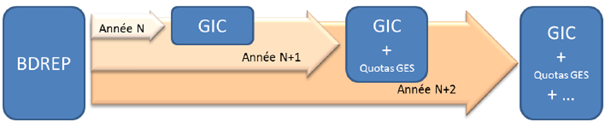
La caractérisation des activités du territoire et de ses pressions nécessite dans le cas du secteur de l’Industrie une investigation ciblée mais aussi de terrain compte tenu des limites liées à l’utilisation de données déclaratives et statistiques pour l’élaboration de bilans territoriaux fins.

Cette investigation n’est possible (sauf investissement majeur dans l’observation) que de manière progressive et ciblée.

Extrait du guide PCIT sur l’exploitation progressive des données de la BDREP :

[![image.png](https://documentation.rare.fr/uploads/images/gallery/2022-12/scaled-1680-/image.png)](https://documentation.rare.fr/uploads/images/gallery/2022-12/image.png)
<span style="mso-no-proof: yes;"> </span>

De plus, elle ne peut être, comme écrit dans le guide PCIT « difficilement être automatisée, au risque de commettre des erreurs. La meilleure méthode consiste à prendre le temps de comprendre le fonctionnement des industriels pour faire les choix optimaux. »

### Procédure spécifique applicable aux consommations de combustibles destinées à la production d’énergie

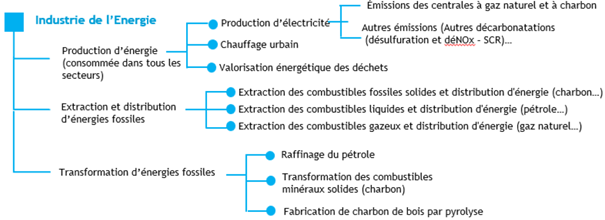
Le secteur dénommé « Industrie de l’énergie » regroupe les activités d’extraction, de production, de transformation et de distribution d’énergie. Il nécessite une comptabilité « à part » pour des questions de rapportage d’une part[<span class="MsoFootnoteReference"><span style="mso-special-character: footnote;"><span style="font-size: 11.0pt; line-height: 107%; font-family: 'Calibri',sans-serif; mso-ascii-theme-font: minor-latin; mso-fareast-font-family: Calibri; mso-fareast-theme-font: minor-latin; mso-hansi-theme-font: minor-latin; mso-bidi-font-family: 'Times New Roman'; mso-bidi-theme-font: minor-bidi; mso-ansi-language: FR; mso-fareast-language: EN-US; mso-bidi-language: AR-SA;">\[6\]</span></span></span>](#_ftn4) mais aussi pour permettre l’établissement d’un bilan énergétique territorial en énergie finale.

<span class="MsoSubtleEmphasis">La « branche énergie », extrait du rapport SECTEN réalisé par le Citepa :</span>

[![image.png](https://documentation.rare.fr/uploads/images/gallery/2022-12/scaled-1680-/JWRimage.png)](https://documentation.rare.fr/uploads/images/gallery/2022-12/JWRimage.png)

<span style="mso-no-proof: yes;"> </span>

La procédure de capitalisation des données et d’estimation des émissions de GES applicable à ce sous-secteur est détaillée dans le **<span style="color: red;">guide méthodologique pour l’élaboration des inventaires territoriaux des émissions atmosphériques (polluants de l’air et gaz à effet de serre)</span>**

Sur le plan énergétique, le traitement devra notamment distinguer la consommation dédiée à la production d’électricité et de chaleur commercialisée (comptabilisée dans le secteur dénommé Industrie de l’énergie) ou et celle qui doit être comptabilisée en consommation finale en se référant au règlement 1099/2008, c’est-à-dire en distinguant :

<span style="mso-ascii-font-family: Calibri; mso-fareast-font-family: Calibri; mso-hansi-font-family: Calibri; mso-bidi-font-family: Calibri;"><span style="mso-list: Ignore;">-<span style="font: 7.0pt 'Times New Roman';"> </span></span></span>Les « producteurs en activité principale » : producteurs, tant privés que publics, dont l'activité principale est la production d'électricité et/ou de chaleur destinée à la vente à des tiers » ;

<span style="mso-ascii-font-family: Calibri; mso-fareast-font-family: Calibri; mso-hansi-font-family: Calibri; mso-bidi-font-family: Calibri;"><span style="mso-list: Ignore;">-<span style="font: 7.0pt 'Times New Roman';"> </span></span></span>Les « auto-producteurs » : producteurs, tant privés que publics, qui produisent de l'électricité et/ou de la chaleur, en totalité ou en partie, pour leur consommation propre en tant qu'activité qui contribue à leur activité principale ».

Cette distinction est faite à l’échelle nationale par le SDES[<span class="MsoFootnoteReference"><span style="mso-special-character: footnote;"><span style="font-size: 11.0pt; line-height: 107%; font-family: 'Calibri',sans-serif; mso-ascii-theme-font: minor-latin; mso-fareast-font-family: Calibri; mso-fareast-theme-font: minor-latin; mso-hansi-theme-font: minor-latin; mso-bidi-font-family: 'Times New Roman'; mso-bidi-theme-font: minor-bidi; mso-ansi-language: FR; mso-fareast-language: EN-US; mso-bidi-language: AR-SA;">\[7\]</span></span></span>](#_ftn5) sur la base de l’activité déclarée par l’entité. Les producteurs principaux sont ceux qui relèvent de la division 35 « production et distribution d'électricité, de gaz, de vapeur et d'air conditionné » de la NAF.

<p class="callout info">Les règles de comptabilisation des produits en entrée et en sortie établies à l’échelle nationale sont détaillées pp. 16 à 20 du rapport méthodologie du bilan énergétique de la France ǀ janvier 2022<span class="MsoCommentReference"><span style="font-size: 8.0pt; line-height: 107%; background: yellow; mso-highlight: yellow;"></span></span></p>

---

[<span class="MsoFootnoteReference"><span style="mso-special-character: footnote;"><span style="font-size: 10.0pt; line-height: 107%; font-family: 'Calibri',sans-serif; mso-ascii-theme-font: minor-latin; mso-fareast-font-family: Calibri; mso-fareast-theme-font: minor-latin; mso-hansi-theme-font: minor-latin; mso-bidi-font-family: 'Times New Roman'; mso-bidi-theme-font: minor-bidi; mso-ansi-language: FR; mso-fareast-language: EN-US; mso-bidi-language: AR-SA;">\[1\]</span></span></span>](#_ftnref1) La Base de Données Registre des Émissions de Polluants - BDREP - contient “les émissions polluantes dans l’air, les déchets et les rejets dans l’eau \[...\] des installations classées ou soumises à autorisation” lorsque leurs rejets dépassent au moins un seuil d’émission pour un polluant (si les rejets d’un établissement passent au-dessous des seuils, elle est tout de même tenue de déclarer ses émissions pour une année supplémentaire) ainsi que les consommations de combustibles et procédés de production qu’elles mettent en œuvre. Ces données sont issues des déclarations d’émissions, obligatoires depuis 2007, pour les exploitants de ce type d’établissements.

[<span class="MsoFootnoteReference"><span style="mso-special-character: footnote;"><span style="font-size: 10.0pt; line-height: 107%; font-family: 'Calibri',sans-serif; mso-ascii-theme-font: minor-latin; mso-fareast-font-family: Calibri; mso-fareast-theme-font: minor-latin; mso-hansi-theme-font: minor-latin; mso-bidi-font-family: 'Times New Roman'; mso-bidi-theme-font: minor-bidi; mso-ansi-language: FR; mso-fareast-language: EN-US; mso-bidi-language: AR-SA;">\[2\]</span></span></span>](#_ftnref2) L’EACEI fournit les quantités consommées par type d'énergie, les coûts afférents, et la répartition par usage de chaque énergie utilisée des secteurs d’activités suivants : sections B et C de la NAF (division 05 à 33), groupe 383 (récupération), hors sous classes : 1013B, 1071B, 1071C, 1071D (artisanat commercial), 2013A et 2446Z ; hors divisions 05, 06 et 19 ; hors groupe 091. Depuis 2013, le champ de l’EACEI est restreint aux établissements de 20 salariés ou plus ayant au moins 4 mois d’activité. Auparavant étaient interrogés à partir de 10 salariés : les IAA jusqu’en 2011 et le secteur 2011Z jusqu’à 2012.

[<span class="MsoFootnoteReference"><span style="mso-special-character: footnote;"><span style="font-size: 10.0pt; line-height: 107%; font-family: 'Calibri',sans-serif; mso-ascii-theme-font: minor-latin; mso-fareast-font-family: Calibri; mso-fareast-theme-font: minor-latin; mso-hansi-theme-font: minor-latin; mso-bidi-font-family: 'Times New Roman'; mso-bidi-theme-font: minor-bidi; mso-ansi-language: FR; mso-fareast-language: EN-US; mso-bidi-language: AR-SA;">\[3\]</span></span></span>](#_ftnref1) DREAL pour BDREP, Commission du secret pour EACEI

[<span class="MsoFootnoteReference"><span style="mso-special-character: footnote;"><span style="font-size: 10.0pt; line-height: 107%; font-family: 'Calibri',sans-serif; mso-ascii-theme-font: minor-latin; mso-fareast-font-family: Calibri; mso-fareast-theme-font: minor-latin; mso-hansi-theme-font: minor-latin; mso-bidi-font-family: 'Times New Roman'; mso-bidi-theme-font: minor-bidi; mso-ansi-language: FR; mso-fareast-language: EN-US; mso-bidi-language: AR-SA;">\[4\]</span></span></span>](#_ftnref2) Les clés de répartition principales utilisées sont les consommations/salarié/NCE ou les consommations/produit/SNAP issus de la BDD OMINEA– cf. tableau 4 p.286 du guide PCIT2

[<span class="MsoFootnoteReference"><span style="mso-special-character: footnote;"><span style="font-size: 10.0pt; line-height: 107%; font-family: 'Calibri',sans-serif; mso-ascii-theme-font: minor-latin; mso-fareast-font-family: Calibri; mso-fareast-theme-font: minor-latin; mso-hansi-theme-font: minor-latin; mso-bidi-font-family: 'Times New Roman'; mso-bidi-theme-font: minor-bidi; mso-ansi-language: FR; mso-fareast-language: EN-US; mso-bidi-language: AR-SA;">\[5\]</span></span></span>](#_ftnref3) Si à l’échelle nationale, la prise en compte des établissements de moins de 20 salariés représenterait, d’après l’Insee à peine 3% de consommation énergétiques industrielles complémentaire, ces consommations peuvent représenter une proportion nettement plus importante sur des territoires restreints (Atmo Grand Est estime cette part à 15% à l’échelle régionale) et plus spécifiquement en zone rurale.

[<span class="MsoFootnoteReference"><span style="mso-special-character: footnote;"><span style="font-size: 10.0pt; line-height: 107%; font-family: 'Calibri',sans-serif; mso-ascii-theme-font: minor-latin; mso-fareast-font-family: Calibri; mso-fareast-theme-font: minor-latin; mso-hansi-theme-font: minor-latin; mso-bidi-font-family: 'Times New Roman'; mso-bidi-theme-font: minor-bidi; mso-ansi-language: FR; mso-fareast-language: EN-US; mso-bidi-language: AR-SA;">\[6\]</span></span></span>](#_ftnref4) Le rapportage PCAET nécessite une distinction entre le Scope 1 et le Scope 2

[<span class="MsoFootnoteReference"><span style="mso-special-character: footnote;"><span style="font-size: 10.0pt; line-height: 107%; font-family: 'Calibri',sans-serif; mso-ascii-theme-font: minor-latin; mso-fareast-font-family: Calibri; mso-fareast-theme-font: minor-latin; mso-hansi-theme-font: minor-latin; mso-bidi-font-family: 'Times New Roman'; mso-bidi-theme-font: minor-bidi; mso-ansi-language: FR; mso-fareast-language: EN-US; mso-bidi-language: AR-SA;">\[7\]</span></span></span>](#_ftnref5) Dans le bilan énergétique national, la consommation de combustible destinée à la production d’électricité et de chaleur commercialisée est affectée au secteur de la « transformation ». Il s’agit d’une dénomination spécifique de la comptabilité du SDES. Il est préférable dans le cas des rapports territoriaux d’employer les termes de sectorisation courants appliqués aux PCAET c’est-à-dire, branche énergie ou secteur Industrie de l’énergie

<div id="bkmrk--15" style="mso-element: footnote-list;"><div id="bkmrk--32" style="mso-element: footnote;">  
</div></div>